
Indian stock market investors are closely monitoring crude oil prices, geopolitical developments in West Asia, and the implications of the US Sanctioning Russia and Iran Act, which could impose tariffs on countries, including India, that purchase Russian crude.

Jio Platforms (JPL) is preparing a capex-light strategy to commercially launch 6G services in the early 2030s through software upgrades, rather than fresh infrastructure investments, according to Akash Ambani, managing director of JPL.

Indian stock markets witnessed a significant rally, with the Sensex soaring 905 points and the Nifty topping 22,900, primarily driven by strong buying in banking and FMCG shares, coupled with easing crude oil prices and a US Fed rate pause.

Net office space leasing in India's top eight cities declined by 20 per cent in the January-September period to 36.7 million sq ft, primarily due to limited fresh supply of quality workspaces and a high base effect from the previous year, according to a report by Cushman & Wakefield. Despite this, gross leasing saw a 1 per cent increase, reaching a record 64.6 million sq ft, indicating strong underlying market activity.

Indian benchmark indices, Sensex and Nifty, saw declines in early trade due to escalating crude oil prices and ongoing US-Iran hostilities, which subdued investor risk appetite.

Himanshu 'Bhau', a notorious gangster from Haryana with 64 criminal cases, has been detained by US authorities for misrepresentation of facts. The kingpin of a global syndicate involved in murder and extortion, he operated from abroad after fleeing India in 2022. Haryana Police are coordinating with CBI for his deportation.

Foreign Portfolio Investors (FPIs) have withdrawn Rs 44,166 crore from Indian equities in October, pushing the total outflows for the year past Rs 3 lakh crore, driven by elevated crude oil prices, a stronger US dollar, higher US bond yields, and the allure of AI-led rallies in North Asian markets.

Indian benchmark equity indices, Sensex and Nifty, closed higher on Monday, driven by softer-than-expected US jobs data which reduced expectations of aggressive monetary tightening by the US Federal Reserve, boosting risk appetite across emerging markets.
The Nifty and Sensex outperformed Asian peers in South Korea, Japan, Taiwan and China.

Indian benchmark indices, Sensex and Nifty, traded marginally higher in early trade despite the US Federal Reserve's recent rate hike and indications of further tightening, with the National Stock Exchange's much-anticipated Rs 22,569-crore IPO also opening for subscription.

'India may never fully participate in the AI hype cycle, but we can position ourselves to benefit from its inevitable disenchantment and the cycle of disillusionment,' alerts Akash Prakash.
Indian benchmark indices Sensex and Nifty experienced declines in early trade, ending a two-day rally, driven by a spike in Brent crude oil prices above USD 101 per barrel and investor caution ahead of the Reserve Bank of India's monetary policy decision. Track Sensex, Nifty on October 7.

The benchmark BSE Sensex rebounded by 362 points, ending a four-day losing streak, driven by strong buying in metal, private banking, and oil and gas shares, while the broader NSE Nifty saw modest gains despite paring some advances in the closing session.
Indian benchmark indices Sensex and Nifty extended their rally for a second consecutive session, driven by a decline in Brent crude oil prices below USD 100 per barrel and strong buying in banking stocks and Reliance Industries.

Indian stock markets, including the Sensex and Nifty, experienced a significant tumble in early trade, driven by escalating tensions in West Asia that pushed crude oil prices close to the USD 100-per-barrel mark, alongside selling in IT stocks and fresh foreign fund outflows.
Indian benchmark indices Sensex and Nifty closed higher for the second consecutive day, primarily driven by robust buying in IT stocks following strong quarterly results and positive global trends. Tech Mahindra notably surged over 8% after reporting a significant jump in net profit.

'Once this entire AI and tech driven euphoria in the Western markets sees a correction there will be a re-evaluation of the Indian equity market and inflows will resume.'
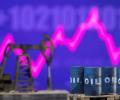
The Indian government has increased the windfall gains tax on the export of diesel and Aviation Turbine Fuel (ATF) while simultaneously eliminating the levy on petrol exports for the fortnight starting October 31.

Indian benchmark indices Sensex and Nifty experienced a decline in early trade, mirroring weak global market trends and persistent outflows from foreign institutional investors (FIIs), exacerbated by ongoing geopolitical uncertainties in West Asia.

AI-managed services firm RapidCanvas, with a significant employee base in India, announced on Friday that it has raised USD 29 million (approximately Rs 275 crore) in Series B funding. The round was led by Vertex Ventures SEA and India, with participation from Hitachi Ventures and existing investors. The company plans to use the funds to expand its go-to-market teams, partner network, and grow its employee base and engineering teams in India, the US, and Brazil, while also investing in product development.

NetApp CEO George Kurian announced that India is the company's fastest-growing market in Asia, driven by strong performance in BFSI, manufacturing, IT services, and public sectors. The company's Bengaluru global capability centre is its largest, housing 4,000 engineers and leading global R&D. NetApp also unveiled new AI-focused storage solutions and cloud partnerships at its Insight event.

Indian benchmark indices, Sensex and Nifty, traded flat in early deals due to elevated crude oil prices exceeding USD 100 per barrel and persistent geopolitical tensions, which subdued investor risk appetite.

Indian benchmark stock indices, Sensex and Nifty, advanced for the second consecutive day, driven by softening crude oil prices and a positive trend in global markets. Despite some profit-taking in IT and metal shares, auto stocks outperformed, contributing to the overall gains.
Indian benchmark indices, Sensex and Nifty, closed higher on Thursday, breaking a three-day losing streak, driven by late buying in financial heavyweights like HDFC Bank and Axis Bank, despite persistent geopolitical tensions and crude oil prices exceeding USD 100 per barrel.

Indian benchmark indices Sensex and Nifty experienced a significant slump in early trade, mirroring a bearish trend in global equities, as escalating conflict in West Asia drove up crude oil prices and intensified investor concerns.

Indian benchmark stock indices, Sensex and Nifty, rebounded significantly after a four-day losing streak, driven by value buying and strong performance in metal, telecommunication, and healthcare sectors.

Crude oil prices are set for another volatile week with an upward bias, as ongoing US-Iran negotiations and heightened geopolitical risks, particularly concerning energy shipments through the Strait of Hormuz, continue to influence the market, according to analysts.

Indian stock market benchmark indices closed higher, driven by strong performance in blue-chip bank shares and a positive trend in global markets, with hopes of progress in US-Iran peace negotiations also contributing to optimism.
Indian benchmark indices Sensex and Nifty experienced volatile trading, influenced by elevated crude oil prices, high US bond yields, and selling pressure in IT stocks, despite an early rebound.
Indian benchmark stock indices, Sensex and Nifty, rallied significantly, with Sensex jumping over 1,500 points and Nifty reaching a nearly three-week high, driven by strong buying in banking, IT, and Reliance Industries stocks, alongside easing crude oil prices.

The Union Cabinet has approved the Khelo India Sports Goods Manufacturing Scheme with an outlay of Rs 1,856.67 crore for 2026-2033-34. This initiative aims to strengthen India's position in the global sports goods sector through dedicated manufacturing zones, research, skill development, and market expansion, fostering self-reliance and creating employment opportunities.

Indian benchmark stock indices, Sensex and Nifty, closed lower due to profit-taking, a spike in wholesale price-based inflation, and firm crude oil prices, despite some support from easing intraday crude oil prices and rupee appreciation.

Indian benchmark indices, Sensex and Nifty, experienced a significant drop of over 1 per cent, driven by a bearish trend in global markets, weakness in HDFC Bank and IT firms, and fresh foreign fund outflows.
Indian benchmark indices, Sensex and Nifty, experienced declines in early trade due to elevated crude oil prices, escalating US-Iran hostilities, and renewed concerns over a potential US interest rate hike.

Apple has reported an all-time revenue high in India for the September quarter, alongside record performance in Mac and services revenue, and a September-quarter high in terms of iPhone upgraders, indicating strong business momentum in the country.

Zoho Corporation has paused annual pay hikes and reduced marketing expenditure, citing a four-fold increase in server prices for AI infrastructure and an uncertain software sector outlook, according to founder Sridhar Vembu.

RBI Governor Sanjay Malhotra reiterated India's cautious stance on cryptocurrencies due to concerns over monetary sovereignty and capital flows, while actively promoting underlying technologies like distributed ledger technology and tokenisation. He also addressed the global rise in public debt and hardening bond yields, attributing it to increased government and private spending, including that driven by AI, and noted the implications of global interest rates on India's monetary policy.

Indian benchmark equity indices, Sensex and Nifty, ended sharply lower, with the Sensex tumbling 876.37 points and the Nifty dropping below 22,900, primarily due to a decline in private bank stocks like HDFC Bank and Axis Bank, alongside weak global market trends.

Indian equity benchmark indices extended losses for a second consecutive session, with the Sensex dropping 143 points, driven by a sell-off in power, banking, and financial stocks, coupled with elevated crude oil prices and persistent FII selling.

Cummins India has announced the appointment of Gbile Adewunmi as its new Managing Director, effective November 1. Adewunmi, currently VP for Power Systems Industrial Markets, will also take on CEO responsibilities, highlighting India's strategic importance to Cummins.
